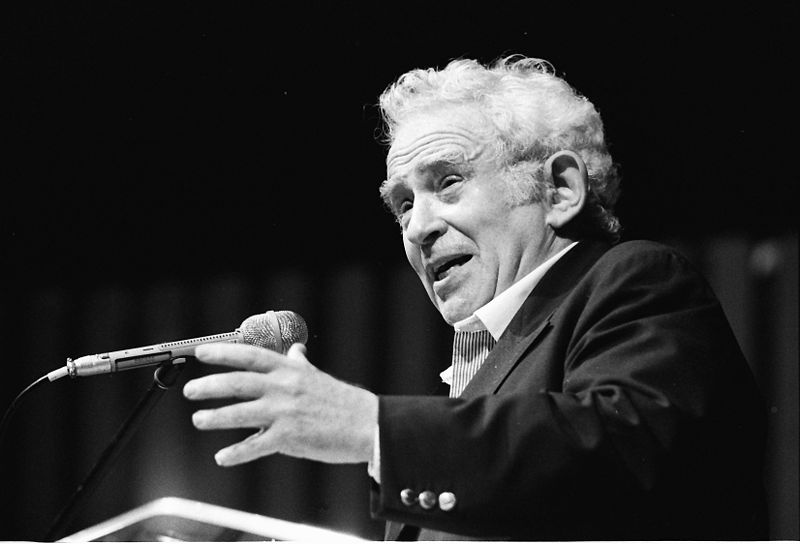
Henry David Thoreau
, 12.7.1817 - 6.5.1862, war ein US-amerikanischer Schriftsteller und Philosoph.
Wikipedia
The Walden Woods Project
Walden
A chapter from:
WALDEN,
and
ON THE DUTY OF CIVIL DISOBEDIENCE
By Henry David Thoreau
Reading
With a little more deliberation in the choice of their pursuits, all men
would perhaps become essentially students and observers, for certainly
their nature and destiny are interesting to all alike. In accumulating
property for ourselves or our posterity, in founding a family or a
state, or acquiring fame even, we are mortal; but in dealing with
truth we are immortal, and need fear no change nor accident. The oldest
Egyptian or Hindoo philosopher raised a corner of the veil from the
statue of the divinity; and still the trembling robe remains raised, and
I gaze upon as fresh a glory as he did, since it was I in him that was
then so bold, and it is he in me that now reviews the vision. No dust
has settled on that robe; no time has elapsed since that divinity was
revealed. That time which we really improve, or which is improvable, is
neither past, present, nor future.
My residence was more favorable, not only to thought, but to serious
reading, than a university; and though I was beyond the range of the
ordinary circulating library, I had more than ever come within the
influence of those books which circulate round the world, whose
sentences were first written on bark, and are now merely copied from
time to time on to linen paper. Says the poet Mîr Camar Uddîn Mast, "Being seated, to
run through the region of the spiritual world; I have had this
advantage in books. To be intoxicated by a single glass of wine; I have
experienced this pleasure when I have drunk the liquor of the esoteric
doctrines." I kept Homer's Iliad on my table through the summer, though
I looked at his page only now and then. Incessant labor with my hands,
at first, for I had my house to finish and my beans to hoe at the same
time, made more study impossible. Yet I sustained myself by the prospect
of such reading in future. I read one or two shallow books of travel
in the intervals of my work, till that employment made me ashamed of
myself, and I asked where it was then that
I lived.
The student may read Homer or Æschylus in the Greek without danger of
dissipation or luxuriousness, for it implies that he in some measure
emulate their heroes, and consecrate morning hours to their pages. The
heroic books, even if printed in the character of our mother tongue,
will always be in a language dead to degenerate times; and we must
laboriously seek the meaning of each word and line, conjecturing a
larger sense than common use permits out of what wisdom and valor and
generosity we have. The modern cheap and fertile press, with all its
translations, has done little to bring us nearer to the heroic writers
of antiquity. They seem as solitary, and the letter in which they
are printed as rare and curious, as ever. It is worth the expense of
youthful days and costly hours, if you learn only some words of an
ancient language, which are raised out of the trivialness of the street,
to be perpetual suggestions and provocations. It is not in vain that the
farmer remembers and repeats the few Latin words which he has heard. Men
sometimes speak as if the study of the classics would at length make way
for more modern and practical studies; but the adventurous student will
always study classics, in whatever language they may be written and
however ancient they may be. For what are the classics but the noblest
recorded thoughts of man? They are the only oracles which are not
decayed, and there are such answers to the most modern inquiry in them
as Delphi and Dodona never gave. We might as well omit to study Nature
because she is old. To read well, that is, to read true books in a true
spirit, is a noble exercise, and one that will task the reader more than
any exercise which the customs of the day esteem. It requires a training
such as the athletes underwent, the steady intention almost of the whole
life to this object. Books must be read as deliberately and reservedly
as they were written. It is not enough even to be able to speak the
language of that nation by which they are written, for there is a
memorable interval between the spoken and the written language, the
language heard and the language read. The one is commonly transitory,
a sound, a tongue, a dialect merely, almost brutish, and we learn
it unconsciously, like the brutes, of our mothers. The other is the
maturity and experience of that; if that is our mother tongue, this is
our father tongue, a reserved and select expression, too significant to
be heard by the ear, which we must be born again in order to speak. The
crowds of men who merely spoke the Greek and Latin tongues in the Middle
Ages were not entitled by the accident of birth to read the works of
genius written in those languages; for these were not written in
that Greek or Latin which they knew, but in the select language of
literature. They had not learned the nobler dialects of Greece and Rome,
but the very materials on which they were written were waste paper to
them, and they prized instead a cheap contemporary literature. But when
the several nations of Europe had acquired distinct though rude written
languages of their own, sufficient for the purposes of their rising
literatures, then first learning revived, and scholars were enabled to
discern from that remoteness the treasures of antiquity. What the Roman
and Grecian multitude could not
hear, after the lapse of ages a few
scholars
read, and a few scholars only are still reading it.
However much we may admire the orator's occasional bursts of eloquence,
the noblest written words are commonly as far behind or above the
fleeting spoken language as the firmament with its stars is behind
the clouds.
There are the stars, and they who can may read them.
The astronomers forever comment on and observe them. They are not
exhalations like our daily colloquies and vaporous breath. What is
called eloquence in the forum is commonly found to be rhetoric in the
study. The orator yields to the inspiration of a transient occasion, and
speaks to the mob before him, to those who can
hear him; but the writer,
whose more equable life is his occasion, and who would be distracted
by the event and the crowd which inspire the orator, speaks to the
intellect and health of mankind, to all in any age who can
understand
him.
No wonder that Alexander carried the Iliad with him on his expeditions
in a precious casket. A written word is the choicest of relics. It is
something at once more intimate with us and more universal than any
other work of art. It is the work of art nearest to life itself. It may
be translated into every language, and not only be read but actually
breathed from all human lips;—not be represented on canvas or in marble
only, but be carved out of the breath of life itself. The symbol of
an ancient man's thought becomes a modern man's speech. Two thousand
summers have imparted to the monuments of Grecian literature, as to her
marbles, only a maturer golden and autumnal tint, for they have carried
their own serene and celestial atmosphere into all lands to protect them
against the corrosion of time. Books are the treasured wealth of the
world and the fit inheritance of generations and nations. Books, the
oldest and the best, stand naturally and rightfully on the shelves of
every cottage. They have no cause of their own to plead, but while they
enlighten and sustain the reader his common sense will not refuse
them. Their authors are a natural and irresistible aristocracy in
every society, and, more than kings or emperors, exert an influence on
mankind. When the illiterate and perhaps scornful trader has earned by
enterprise and industry his coveted leisure and independence, and is
admitted to the circles of wealth and fashion, he turns inevitably at
last to those still higher but yet inaccessible circles of intellect and
genius, and is sensible only of the imperfection of his culture and the
vanity and insufficiency of all his riches, and further proves his
good sense by the pains which he takes to secure for his children that
intellectual culture whose want he so keenly feels; and thus it is that
he becomes the founder of a family.
Those who have not learned to read the ancient classics in the language
in which they were written must have a very imperfect knowledge of the
history of the human race; for it is remarkable that no transcript of
them has ever been made into any modern tongue, unless our civilization
itself may be regarded as such a transcript. Homer has never yet been
printed in English, nor Æschylus, nor Virgil even—works as refined, as
solidly done, and as beautiful almost as the morning itself; for
later writers, say what we will of their genius, have rarely, if ever,
equalled the elaborate beauty and finish and the lifelong and heroic
literary labors of the ancients. They only talk of forgetting them who
never knew them. It will be soon enough to forget them when we have the
learning and the genius which will enable us to attend to and appreciate
them. That age will be rich indeed when those relics which we call
Classics, and the still older and more than classic but even less known
Scriptures of the nations, shall have still further accumulated, when
the Vaticans shall be filled with Vedas and Zendavestas and Bibles, with
Homers and Dantes and Shakespeares, and all the centuries to come shall
have successively deposited their trophies in the forum of the world. By
such a pile we may hope to scale heaven at last.
The works of the great poets have never yet been read by mankind,
for only great poets can read them. They have only been read as the
multitude read the stars, at most astrologically, not astronomically.
Most men have learned to read to serve a paltry convenience, as they
have learned to cipher in order to keep accounts and not be cheated in
trade; but of reading as a noble intellectual exercise they know little
or nothing; yet this only is reading, in a high sense, not that which
lulls us as a luxury and suffers the nobler faculties to sleep the
while, but what we have to stand on tip-toe to read and devote our most
alert and wakeful hours to.
I think that having learned our letters we should read the best that is
in literature, and not be forever repeating our a-b-abs, and words of
one syllable, in the fourth or fifth classes, sitting on the lowest and
foremost form all our lives. Most men are satisfied if they read or hear
read, and perchance have been convicted by the wisdom of one good book,
the Bible, and for the rest of their lives vegetate and dissipate their
faculties in what is called easy reading. There is a work in several
volumes in our Circulating Library entitled "Little Reading," which I
thought referred to a town of that name which I had not been to. There
are those who, like cormorants and ostriches, can digest all sorts of
this, even after the fullest dinner of meats and vegetables, for they
suffer nothing to be wasted. If others are the machines to provide
this provender, they are the machines to read it. They read the nine
thousandth tale about Zebulon and Sophronia, and how they loved as none
had ever loved before, and neither did the course of their true love run
smooth—at any rate, how it did run and stumble, and get up again and
go on! how some poor unfortunate got up on to a steeple, who had better
never have gone up as far as the belfry; and then, having needlessly
got him up there, the happy novelist rings the bell for all the world to
come together and hear, O dear! how he did get down again! For my part,
I think that they had better metamorphose all such aspiring heroes of
universal noveldom into man weather-cocks, as they used to put heroes
among the constellations, and let them swing round there till they are
rusty, and not come down at all to bother honest men with their pranks.
The next time the novelist rings the bell I will not stir though the
meeting-house burn down. "The Skip of the Tip-Toe-Hop, a Romance of the
Middle Ages, by the celebrated author of 'Tittle-Tol-Tan,' to appear
in monthly parts; a great rush; don't all come together." All this
they read with saucer eyes, and erect and primitive curiosity, and with
unwearied gizzard, whose corrugations even yet need no sharpening, just
as some little four-year-old bencher his two-cent gilt-covered
edition of Cinderella—without any improvement, that I can see, in the
pronunciation, or accent, or emphasis, or any more skill in extracting
or inserting the moral. The result is dulness of sight, a stagnation of
the vital circulations, and a general deliquium and sloughing off of all
the intellectual faculties. This sort of gingerbread is baked daily and
more sedulously than pure wheat or rye-and-Indian in almost every oven,
and finds a surer market.
The best books are not read even by those who are called good readers.
What does our Concord culture amount to? There is in this town, with a
very few exceptions, no taste for the best or for very good books even
in English literature, whose words all can read and spell. Even the
college-bred and so-called liberally educated men here and elsewhere
have really little or no acquaintance with the English classics; and
as for the recorded wisdom of mankind, the ancient classics and Bibles,
which are accessible to all who will know of them, there are the
feeblest efforts anywhere made to become acquainted with them. I know a
woodchopper, of middle age, who takes a French paper, not for news as he
says, for he is above that, but to "keep himself in practice," he being
a Canadian by birth; and when I ask him what he considers the best thing
he can do in this world, he says, beside this, to keep up and add to
his English. This is about as much as the college-bred generally do or
aspire to do, and they take an English paper for the purpose. One who
has just come from reading perhaps one of the best English books will
find how many with whom he can converse about it? Or suppose he comes
from reading a Greek or Latin classic in the original, whose praises are
familiar even to the so-called illiterate; he will find nobody at all
to speak to, but must keep silence about it. Indeed, there is hardly the
professor in our colleges, who, if he has mastered the difficulties of
the language, has proportionally mastered the difficulties of the wit
and poetry of a Greek poet, and has any sympathy to impart to the
alert and heroic reader; and as for the sacred Scriptures, or Bibles of
mankind, who in this town can tell me even their titles? Most men do not
know that any nation but the Hebrews have had a scripture. A man, any
man, will go considerably out of his way to pick up a silver dollar; but
here are golden words, which the wisest men of antiquity have uttered,
and whose worth the wise of every succeeding age have assured us
of;—and yet we learn to read only as far as Easy Reading, the primers
and class-books, and when we leave school, the "Little Reading," and
story-books, which are for boys and beginners; and our reading, our
conversation and thinking, are all on a very low level, worthy only of
pygmies and manikins.
I aspire to be acquainted with wiser men than this our Concord soil has
produced, whose names are hardly known here. Or shall I hear the name of
Plato and never read his book? As if Plato were my townsman and I never
saw him—my next neighbor and I never heard him speak or attended to
the wisdom of his words. But how actually is it? His Dialogues, which
contain what was immortal in him, lie on the next shelf, and yet I never
read them. We are underbred and low-lived and illiterate; and in this
respect I confess I do not make any very broad distinction between
the illiterateness of my townsman who cannot read at all and the
illiterateness of him who has learned to read only what is for
children and feeble intellects. We should be as good as the worthies of
antiquity, but partly by first knowing how good they were. We are a race
of tit-men, and soar but little higher in our intellectual flights than
the columns of the daily paper.
It is not all books that are as dull as their readers. There are
probably words addressed to our condition exactly, which, if we could
really hear and understand, would be more salutary than the morning or
the spring to our lives, and possibly put a new aspect on the face of
things for us. How many a man has dated a new era in his life from the
reading of a book! The book exists for us, perchance, which will explain
our miracles and reveal new ones. The at present unutterable things we
may find somewhere uttered. These same questions that disturb and puzzle
and confound us have in their turn occurred to all the wise men; not one
has been omitted; and each has answered them, according to his ability,
by his words and his life. Moreover, with wisdom we shall learn
liberality. The solitary hired man on a farm in the outskirts of
Concord, who has had his second birth and peculiar religious experience,
and is driven as he believes into the silent gravity and exclusiveness
by his faith, may think it is not true; but Zoroaster, thousands of
years ago, travelled the same road and had the same experience; but
he, being wise, knew it to be universal, and treated his neighbors
accordingly, and is even said to have invented and established worship
among men. Let him humbly commune with Zoroaster then, and through the
liberalizing influence of all the worthies, with Jesus Christ himself,
and let "our church" go by the board.
We boast that we belong to the Nineteenth Century and are making the
most rapid strides of any nation. But consider how little this village
does for its own culture. I do not wish to flatter my townsmen, nor to
be flattered by them, for that will not advance either of us. We need
to be provoked—goaded like oxen, as we are, into a trot. We have a
comparatively decent system of common schools, schools for infants only;
but excepting the half-starved Lyceum in the winter, and latterly
the puny beginning of a library suggested by the State, no school for
ourselves. We spend more on almost any article of bodily aliment or
ailment than on our mental aliment. It is time that we had uncommon
schools, that we did not leave off our education when we begin to be men
and women. It is time that villages were universities, and their elder
inhabitants the fellows of universities, with leisure—if they are,
indeed, so well off—to pursue liberal studies the rest of their lives.
Shall the world be confined to one Paris or one Oxford forever? Cannot
students be boarded here and get a liberal education under the skies of
Concord? Can we not hire some Abelard to lecture to us? Alas! what with
foddering the cattle and tending the store, we are kept from school too
long, and our education is sadly neglected. In this country, the village
should in some respects take the place of the nobleman of Europe. It
should be the patron of the fine arts. It is rich enough. It wants only
the magnanimity and refinement. It can spend money enough on such things
as farmers and traders value, but it is thought Utopian to propose
spending money for things which more intelligent men know to be of
far more worth. This town has spent seventeen thousand dollars on a
town-house, thank fortune or politics, but probably it will not spend so
much on living wit, the true meat to put into that shell, in a hundred
years. The one hundred and twenty-five dollars annually subscribed for a
Lyceum in the winter is better spent than any other equal sum raised in
the town. If we live in the Nineteenth Century, why should we not enjoy
the advantages which the Nineteenth Century offers? Why should our life
be in any respect provincial? If we will read newspapers, why not
skip the gossip of Boston and take the best newspaper in the world at
once?—not be sucking the pap of "neutral family" papers, or browsing
"Olive Branches" here in New England. Let the reports of all the learned
societies come to us, and we will see if they know anything. Why
should we leave it to Harper & Brothers and Redding & Co. to select
our reading? As the nobleman of cultivated taste surrounds himself
with whatever conduces to his culture—genius—learning—wit—books—
paintings—statuary—music—philosophical instruments, and the like; so
let the village do—not stop short at a pedagogue, a parson, a sexton, a
parish library, and three selectmen, because our Pilgrim forefathers got
through a cold winter once on a bleak rock with these. To act
collectively is according to the spirit of our institutions; and I am
confident that, as our circumstances are more flourishing, our means are
greater than the nobleman's. New England can hire all the wise men in
the world to come and teach her, and board them round the while, and not
be provincial at all. That is the
uncommon school we want. Instead of
noblemen, let us have noble villages of men. If it is necessary, omit
one bridge over the river, go round a little there, and throw one arch
at least over the darker gulf of ignorance which surrounds us.

 Sylvia Plath (October 27, 1932 – February 11, 1963) was an American poet, novelist and short story writer who commited suicide after having suffered from depression.